Expertise
Construction Quality
Finishes are what a home is sold on. Envelope and mechanical quality are what it is lived in. Learning to read the second set is the highest-leverage thing a new construction buyer can do.
- Insulation
- Air sealing
- HVAC
- Windows
- Moisture
- Materials
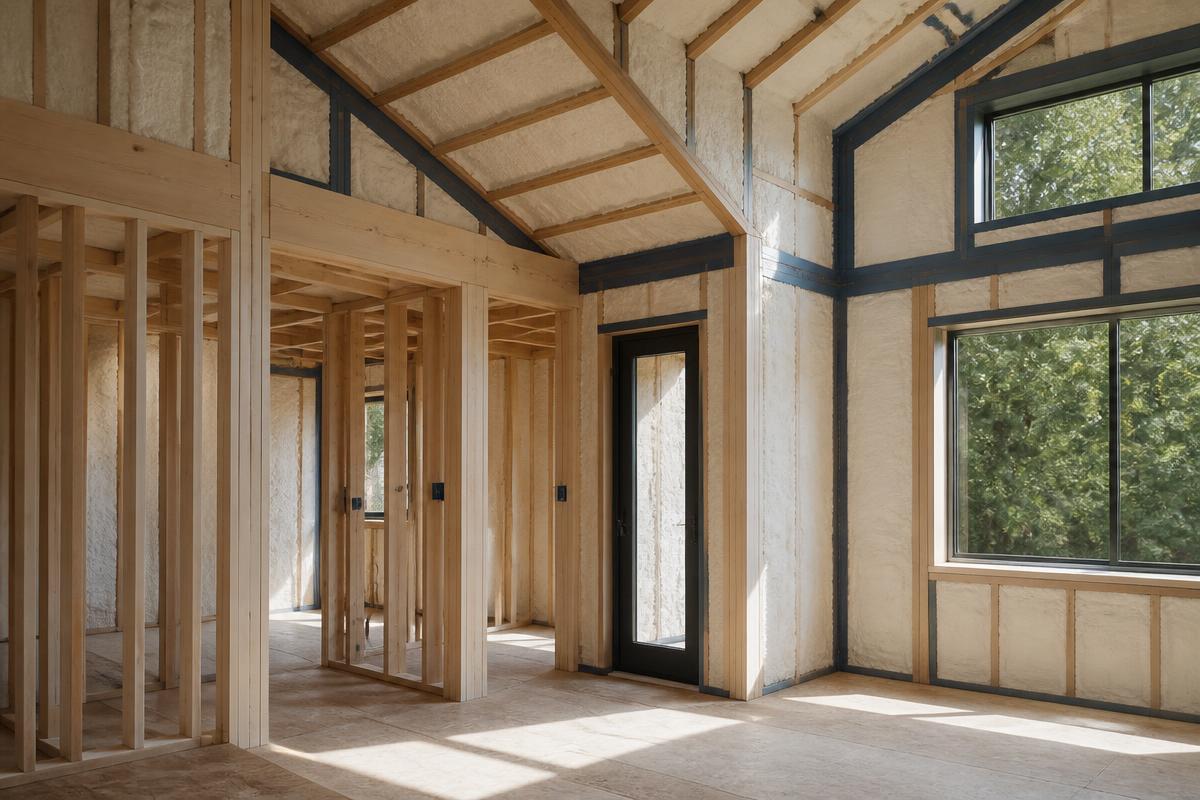
Insulation and air sealing
Insulation slows heat transfer; air sealing stops air movement. A home can hit its rated R-value and still perform poorly if the envelope leaks at top plates, rim joists, and penetrations.
Ask what is sealed, where, and whether it is verified — not only how many inches are blown into the attic.
HVAC and ventilation
Oversized equipment short-cycles, which means poor humidity control and uneven rooms. Correct sizing comes from a Manual J load calculation, with Manual D duct design behind it.
Tight modern homes also need mechanical fresh air. Ask whether ventilation is passive, a supply-side damper, or a balanced ERV/HRV.
Windows, water, and moisture
Window performance is U-factor and SHGC, matched to climate and orientation. Just as important is flashing: how the opening is drained back out to the weather barrier.
Outside the wall, grade should fall away from the foundation, downspouts should discharge past the backfill, and flatwork should never trap water at the slab.
Materials behind the finish
Sheathing type, house wrap detailing, fastener schedules, subfloor adhesive, and plumbing material all show up in the specification and almost never in the marketing. They determine how the house ages.
Frequently Asked
What is the single most important quality checkpoint?+
The pre-drywall walk. It is the only moment when framing, plumbing, electrical, ductwork, and air sealing are all visible at once.
Should I hire an independent inspector on a new build?+
Yes. Municipal inspections verify code minimums, not workmanship. A third-party inspection at pre-drywall and again before closing is inexpensive relative to what it catches.
Do energy-efficiency upgrades pay for themselves?+
Envelope upgrades usually do, because they cut load for the life of the home and cannot be added cheaply later. Equipment upgrades depend on climate and usage.